
Percolation
Chemex brewing guide
The thickest filter in coffee — clarity in glass.
- Difficulty
- Brew time
- 4–6 min
The science
The Chemex is a percolation brewer defined by its filter: bonded paper 20–30% heavier than a standard cone filter. That thickness slows the flow and traps oils and nearly all fines, producing the clearest, most tea-like cup in coffee — at the cost of body. Everything about brewing a Chemex flows from compensating for that filter.
Because the paper restricts flow so aggressively, grind coarser than you would for a V60 — medium-coarse — or the bed will stall and over-extract. The deep cone also builds a tall bed at larger batch sizes, so keep pours slow and staged to avoid compacting it. Set the folded, multi-layer side of the filter against the pouring spout so the air channel stays open and the brew can breathe.
Temperature and ratio behave like any percolation brew: 92–96 °C, around 1:16. Expect a longer total time than a V60 — four to five minutes for a standard batch is normal, and chasing a faster drawdown by grinding fine is the classic way to ruin one. The Chemex rewards patience and punishes force.
The essentials
- Grind
- medium-coarse · 52–66/100
- Ratio
- 1:15–1:17
- Brew time
- 4:00–6:00
- Water temp
- 92–96 °C
- Agitation
- Slow, staged pours; avoid stirring the deep bed
Brew Chemex with a guided timer.
Blend paces every pour, holds the Chemex to its numbers, and saves what you change for next time. Launching soon on iOS and Android.
Recipes for the Chemex
2 recipes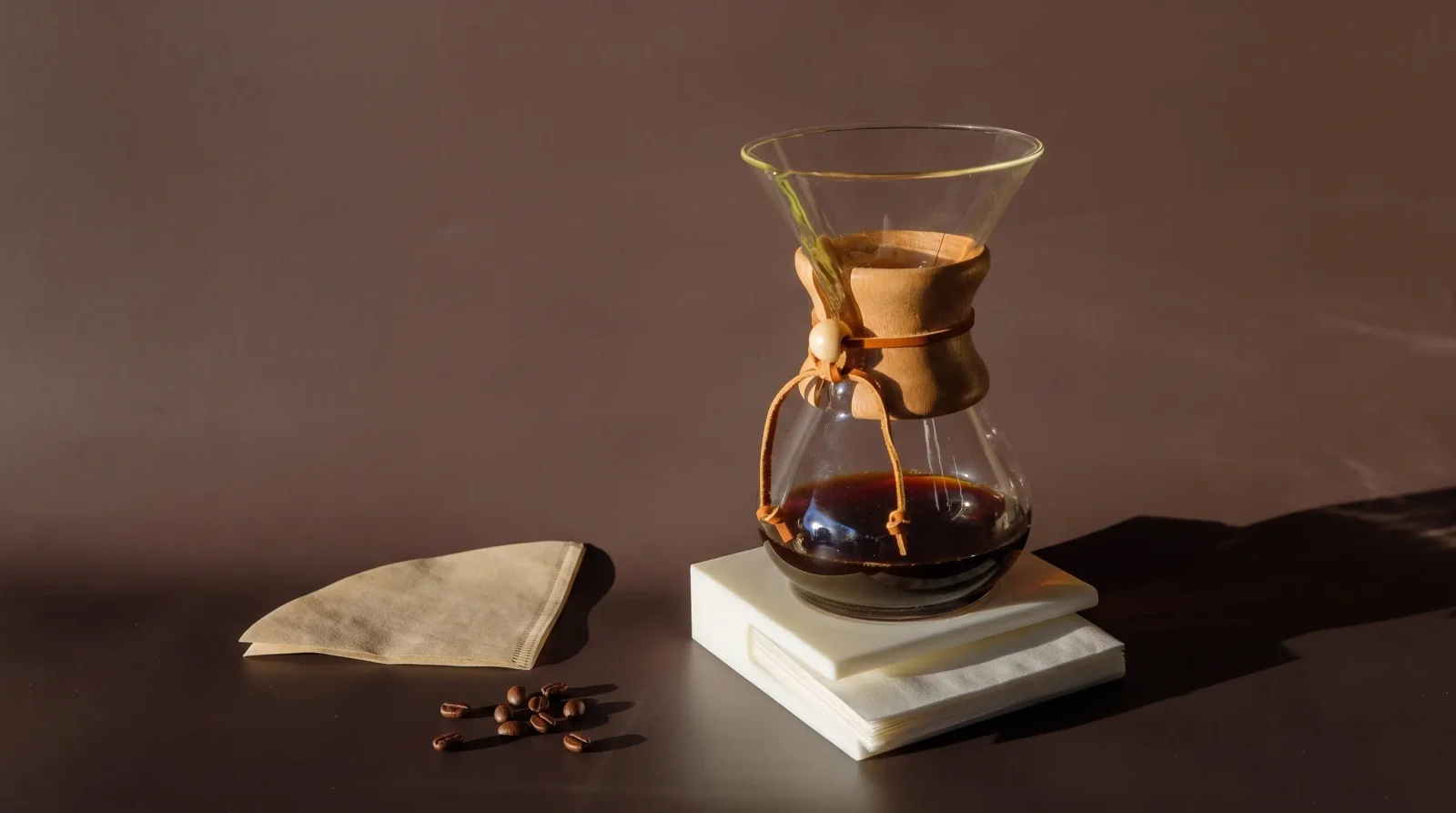
Chemex — Classic
Chemex · Classic 3-Cup
- clean
- floral
- tea-like
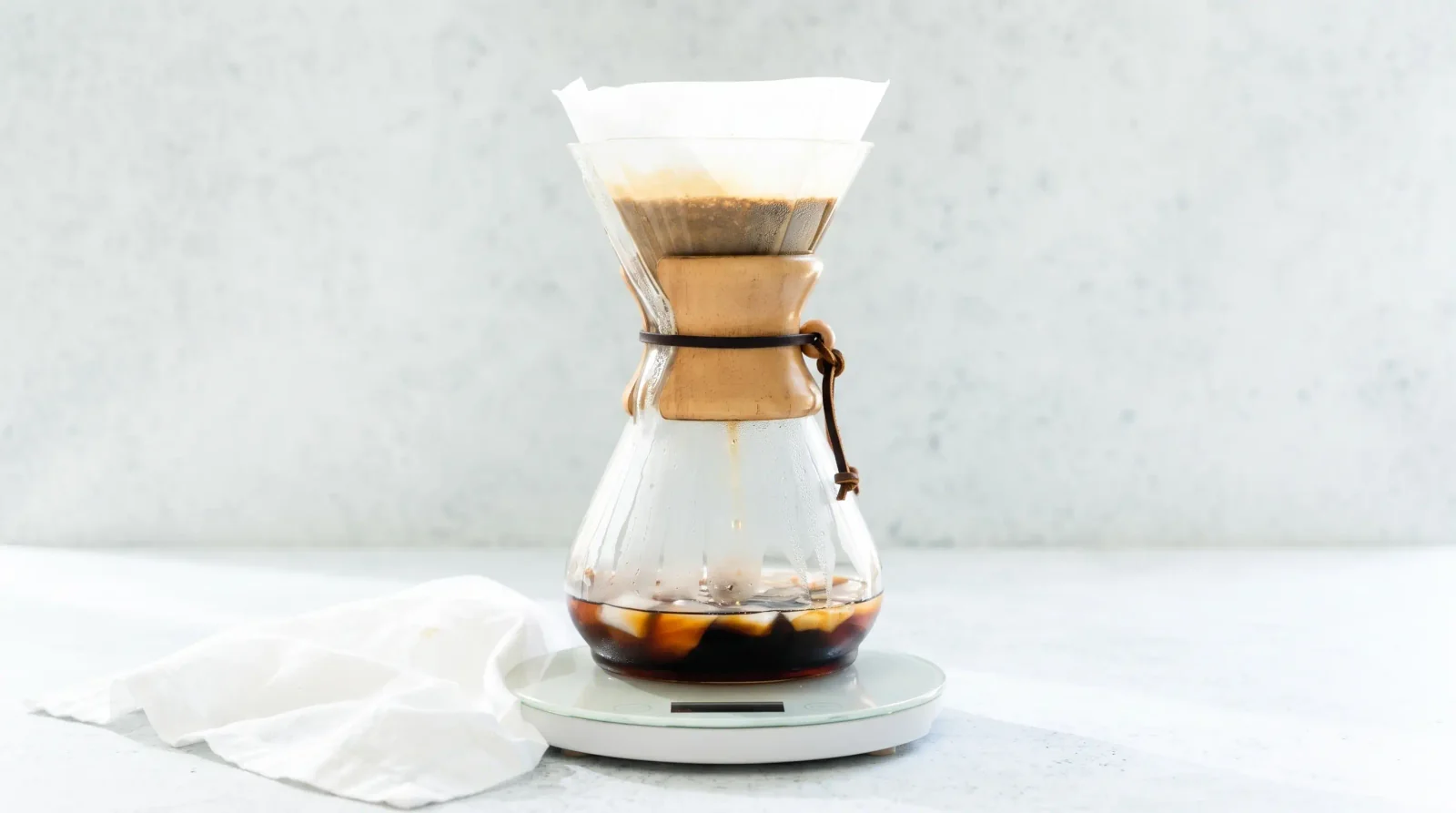
Chemex — Japanese Iced
Chemex · Japanese Iced Chemex
- bright
- fruity
- refreshing
Also in collections
Common questions
What grind size should I use for Chemex?
Aim for a medium-coarse grind, around 52–66/100 on Blend’s 0–100 scale. If the brew runs fast and tastes thin, go finer; if it stalls or turns bitter, go coarser.
What coffee-to-water ratio works best for Chemex?
Between 1:15 and 1:17 coffee to water. Start near 1:16 and add water for a lighter cup or hold back for more strength.
How hot should the water be for Chemex?
92–96 °C suits Chemex. Within that window hotter water extracts faster. Ease it down if the cup turns harsh, up if it tastes flat.